


VifunAI : AI Video Generator
MOON TEMPLE LIMITED
Turning a handful of photos into something that feels ready to share is the main reason I would try VifunAI: AI Video Generator. It belongs to the Art & Design category, comes from MOON TEMPLE LIMITED, and focuses on making short visual creations through AI-assisted tools, templates, effects, and editing choices. My first impression is that it is aimed less at traditional timeline editing and more at helping someone reach an attractive result without starting from a blank project.
That distinction matters. If you already know how to cut clips precisely, balance audio, and build a layered sequence, a conventional editor will still give you finer control. VifunAI is more interesting when the starting material is a set of still images and the goal is a quick social post, a small personal presentation, or a visual experiment. Its strongest idea is reducing the distance between “I have photos” and “I have a video worth showing.”
I spent most of my attention on how this kind of workflow behaves on a phone, because that is where the app makes the most sense. AI creation is rarely just a local tap-and-preview experience: images must be processed, templates need to load, and finished results may take time to appear. That makes the quality of your connection part of the experience, not a minor technical detail.
How VifunAI feels when the network is doing the work
The smoothest sessions begin with a clear idea and a stable connection. I would not open VifunAI while walking between places and expect every creative step to respond instantly. The app’s appeal comes from combining photos with automated visual treatment, so the phone is acting as a control panel for a process that can depend heavily on remote processing and online content. When the connection is steady, the experience feels focused: choose source images, select a direction, adjust the available creative choices, and wait for the result.
That waiting changes how I use it. With a normal photo editor, I can often make a crop or color adjustment immediately, even when reception is poor. With an AI video tool, I prefer to prepare the material first and submit a smaller, more deliberate idea rather than repeatedly experimenting while connected through an unreliable signal. This is one of the first practical lessons I took from using it: connectivity rewards planning more than random tapping.
Related News

Why WhatsApp Messenger Still Makes Everyday Communication Feel Easy

Jurassic World: The Game Is the Better Dino Tycoon for Strategic Players

Threads in Real Life: Who Should Join, Lurk, or Leave

How SHEIN Turned Shopping Into an Endless Content Feed

How to Make Fortnite Feel Smarter on Mobile

Should You Switch to Microsoft Outlook on Mobile?
Templates are particularly sensitive to this. They are useful because they give a photo sequence a recognizable rhythm or mood, but their value depends on being able to preview and apply them without interruptions. If a preview takes too long, I am less likely to compare several options and more likely to accept the first acceptable one. That can make the app feel less creative even when the underlying choices are good.
I also found it helpful to separate creation from sharing. I would rather finish the visual treatment while connected to a dependable Wi-Fi network, review the result carefully, and only then send it to a social platform or a friend. Trying to generate, inspect, export, and upload during a short mobile-data window creates too many opportunities for a stalled step or an incomplete transfer.
Why the photo-first approach works
VifunAI is most approachable when I already know which images belong together. A weekend outing, a birthday gathering, a small product collection, or a before-and-after sequence can provide a natural story. The app then helps turn that raw material into something more expressive than a plain gallery carousel. I do not need to invent every transition or visual treatment myself, which is useful when the message matters more than technical authorship.
Gallery
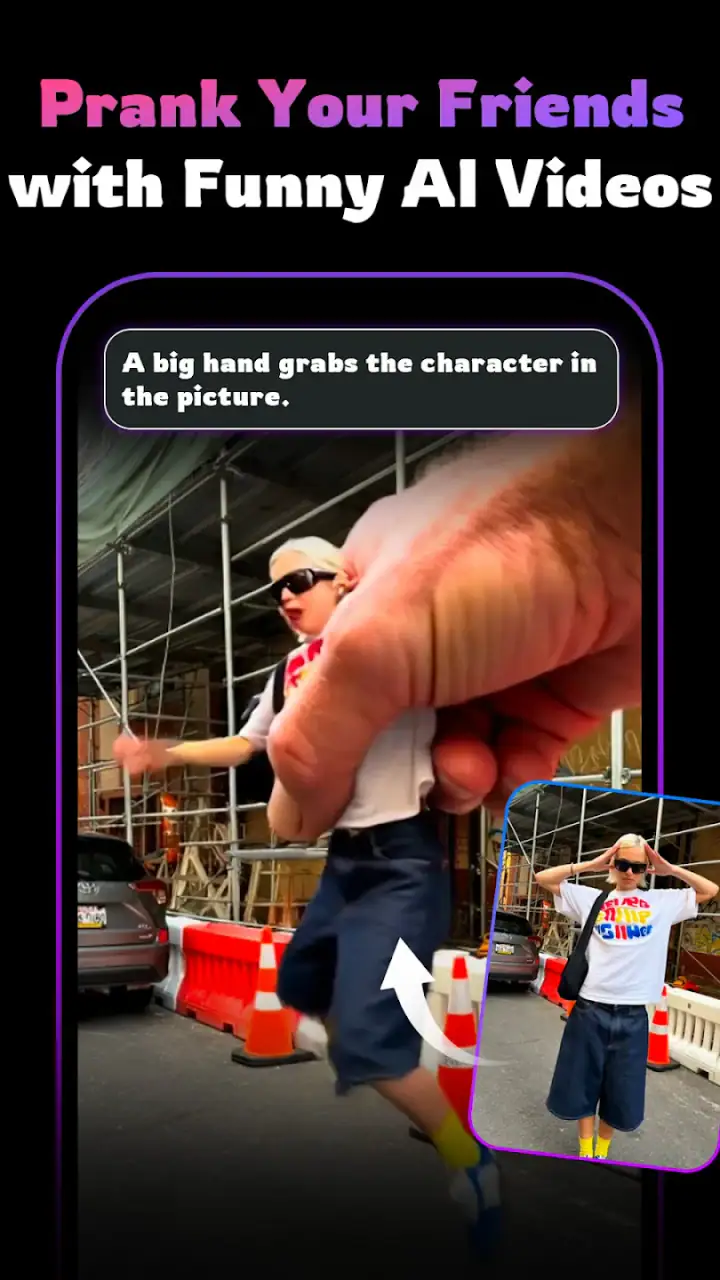
There is also a psychological advantage. Opening a full video editor can make a simple project feel like work. Here, the starting point is familiar: select photos and explore a visual direction. That makes it easier for a casual creator to produce something instead of abandoning the idea at the planning stage.
The trade-off is that automated style can become more noticeable than the photos themselves. I recommend choosing images with a shared subject, lighting style, or color range. When the source pictures are visually unrelated, effects and transitions may make the result feel assembled rather than intentional. A little preparation before importing is more valuable than adding another effect afterward.
Using it in ordinary mobile situations
One realistic use case is a person leaving a family event with several phone photos and wanting a short keepsake before the evening ends. I would choose the clearest images, remove near-duplicates, and work somewhere with reliable Wi-Fi. The aim would not be a documentary record of every moment; it would be a compact visual memory that can be watched without explanation.
Another good situation is a small seller or independent creator who needs a simple visual post from product photos. VifunAI can help when the user wants movement, atmosphere, and a more polished presentation than a static image, but does not want to learn complex keyframing. I would still check every frame before publishing, especially if the product’s shape, text, or color accuracy matters.
It is less suitable when I need exact timing. If a clip must match a spoken line, a beat, a tutorial step, or a precise brand guideline, I would move to a conventional editor. Automated creation can be fast, but speed is not the same as control. VifunAI is better at helping me discover a presentable visual direction than at guaranteeing frame-level precision.
For travel, I would avoid treating it as an emergency editing tool. A weak hotel connection, crowded public Wi-Fi, or limited mobile data can turn a quick creative session into repeated loading. I would prepare photos in advance, keep the project modest, and wait until I have a stable connection for generation and export. That approach also reduces the temptation to keep retrying the same action when the network is the actual problem.
What happens when a request fails
Network-dependent creation has a different failure pattern from ordinary editing. A local adjustment usually changes the current image; an AI generation request may appear to do nothing, remain in progress, or return without the result I expected. When that happens, my first response is not to press the button repeatedly. I check whether the connection is stable, confirm that the source photos are still selected, and give the process a moment before trying again.
I also recommend keeping a simple mental record of the last successful step. If a template loaded but the generated video did not, the problem is probably different from a session where even the template gallery cannot appear. This helps avoid rebuilding the whole project unnecessarily. On a phone, where apps can be interrupted by calls, battery-saving behavior, or switching between screens, returning calmly to the project is more sensible than assuming the creative work has vanished.
For important creations, I would save or export a satisfactory result as soon as it is available rather than continuing to experiment indefinitely. A connection can be excellent one minute and poor the next. I prefer making a safe copy of the version I like, then testing another style separately. That is a small habit, but it protects the useful result from a later failed attempt.
Failure recovery is also where the app’s limits become clearer. A casual user may accept a retry as part of the process, while someone producing content on a deadline may find that uncertainty frustrating. If the final video must be delivered at a specific time, I would use VifunAI for early concepts or quick alternatives and keep a more predictable editor available for the final assembly.
Keeping mobile data under control
Because the app works with photos and generated video, I would treat data use as something to manage deliberately. I would avoid importing every image from a large camera roll, especially when many files are nearly identical. Selecting only the strongest material speeds up decision-making and can reduce unnecessary transfers or processing attempts.
Wi-Fi is my preferred setting for larger projects, previews, and exports. Mobile data makes sense for a small, urgent creation when the connection is strong and the result is worth the cost, but I would not use it casually for endless template comparisons. The most data-conscious workflow is simple: shortlist photos first, choose one or two promising styles, generate only after the project is focused, and share the finished file once.
There is another reason to be selective: visual clutter. More photos do not automatically produce a richer video. A shorter sequence with a clear beginning, middle, and ending usually gives the effects enough room to support the subject. This is an advanced but practical advantage of restraint. It saves time, makes review easier, and avoids spending connectivity on material that was never going to improve the final result.
I would also review the finished video before uploading it elsewhere. That is not only about aesthetics. It gives me a chance to confirm that the chosen images, transitions, and any visible text look correct before using more data to send the file to another service. VifunAI can help with creation, but the final responsibility for what leaves my phone remains with me.
Where it stands beside familiar alternatives
Compared with a standard slideshow maker, VifunAI offers a more exploratory starting point. A slideshow tool usually asks me to arrange images and select straightforward transitions. That can be preferable when I want predictability, but it may feel plain. VifunAI is the better choice when I want the photos to receive a stronger visual treatment without manually constructing every movement.
Compared with a full mobile video editor, it is more inviting but less exact. Timeline-based apps win when I need to trim footage, place captions at precise moments, tune audio, or maintain strict visual consistency. They also demand more attention. I would choose VifunAI for a fast first version, a mood-driven photo video, or an idea I want to test quickly; I would choose the full editor for a polished production with detailed requirements.
Compared with manually animated photo apps, the appeal here is convenience and experimentation. Manual tools reward patience and let me control every motion, but they can make a small project take much longer. The important question is whether I value authorship of each movement or the ability to reach a convincing result with less setup. VifunAI makes the latter trade-off.
The free entry point makes it easy to test that trade-off. Still, the in-app purchase range runs from a few dollars to well over a hundred dollars per item, so I would inspect what a desired workflow requires before committing money. I would not assume that every creative option belongs to the free experience. For a casual user, the free starting point may be enough to decide whether the style suits them; for frequent creators, the possible cost deserves attention.
Who should try it, and who should pass
I think VifunAI is a good fit for people who have photos but lack the time or confidence to turn them into a video manually. It also suits users who enjoy trying different visual moods and do not need every transition to be technically exact. Families, casual social creators, travelers preparing a memory clip, and small sellers testing a visual post can all find a practical reason to use it.
I would be more cautious if your work depends on dependable offline access, exact editing control, or a guaranteed production schedule. A person working during commutes with inconsistent reception may become frustrated by network-dependent steps. Someone who needs precise captions, detailed sound mixing, or repeatable brand templates will probably be happier with a traditional editor. Likewise, if you dislike automated styling and want to build every visual decision yourself, the app may feel restrictive rather than helpful.
The age rating is Teen, which is a useful reminder that the app is not simply a private scrapbook tool for very young children. I would still supervise how younger family members use any AI-assisted creative service and review what they choose to share. The rating does not replace ordinary judgment about personal photos, public posting, and account spending.
Practical details before installing
On Android, the app requires version eight point zero or newer, so most reasonably modern phones should be within its stated compatibility range. The current version is one point two point three point one. I would update before judging the experience, particularly if a template or generation step behaves unexpectedly, because creative apps often depend on the current version for their online workflow.
It is free to install, and its store summary presents the central use clearly: creating AI videos from photos with templates, effects, and creative tools. That description is accurate as a starting point, but it should not be read as a promise of unlimited control. The real value depends on whether the available styles match your taste and whether you are comfortable with a process that may rely on a good connection.
The app has reached over one hundred thousand installs and holds a four-point-zero average from around one thousand ratings, with thirty-five written reviews. I read those figures as evidence of meaningful interest rather than proof that it will suit everyone. The audience is large enough to make the concept feel established, but the experience still deserves a personal test because creative preferences are unusually subjective.
My advice is to begin with a small, low-stakes project. Use a few related photos, try one template or effect direction, and see how the result behaves on your usual network. That test answers the questions that matter most: how patient you are with generation, whether the visual style feels natural, and whether the free experience covers your intended use.
My connectivity verdict
VifunAI: AI Video Generator makes the most sense as a quick, mobile-friendly bridge between a photo collection and a shareable visual idea. I like it because it lowers the technical barrier and encourages experimentation without demanding that I learn a complete editing system first. Its photo-first workflow is especially useful when the story already exists in my camera roll and only needs movement, atmosphere, and structure.
At the same time, I would use it with realistic expectations. A stable connection is important for a comfortable session, and unreliable reception can make an otherwise simple project feel unpredictable. I would prepare the photos before opening the app, prefer Wi-Fi for generation and export, avoid repeated retries, and save a good result before exploring further. Those habits make the experience noticeably less frustrating.
For me, the final decision comes down to control versus convenience. If I want a fast creative draft or a polished-looking photo video with minimal manual work, I would recommend giving it a try. If I need offline reliability, exact timing, detailed audio work, or strict professional consistency, I would start with a conventional editor instead. VifunAI is not a replacement for every tool in mobile video creation, but it is a useful option when the goal is to turn still images into something more alive without making the process feel like a full production job.
FAQs for VifunAI : AI Video Generator
What is VifunAI: AI Video Generator and what can it do?
VifunAI: AI Video Generator is an artificial intelligence-powered creative tool designed to turn written prompts, images, or ideas into short videos. Depending on the available features and plan, users can create animated scenes, social media clips, promotional visuals, and stylized content without advanced video-editing skills. The app is mainly intended for quick experimentation and content creation on mobile devices.
How do I create a video with VifunAI?
After opening VifunAI, you generally begin by selecting a generation mode, entering a text description, or uploading an image to use as the creative reference. You can then choose available visual styles, formats, or other settings before starting the generation process. Since AI rendering may take some time, the final result can vary depending on the prompt, image quality, selected options, and current server availability.
Is VifunAI free to use, or does it require a subscription?
VifunAI may offer free access with limitations, such as a restricted number of generations, lower output quality, waiting times, or watermarked videos. More advanced tools, faster processing, additional credits, or watermark removal may require in-app purchases or a subscription. Before downloading or generating content, users should review the current pricing, trial conditions, renewal terms, and cancellation policy shown in the official app store.
Does VifunAI produce high-quality and reliable AI videos every time?
AI video generation is not always perfectly predictable, so results can differ from one request to another. VifunAI may create impressive visuals from clear and specific prompts, but characters, hands, text, movement, facial details, or scene continuity can sometimes appear inconsistent. Users should expect to regenerate or refine prompts occasionally, especially when producing content intended for professional marketing, publishing, or commercial use.
What should I know about privacy, uploaded images, and generated videos?
Before using VifunAI, check its privacy policy and the permissions requested by the application. Uploaded photos, prompts, and generated videos may be processed through online servers, which means an internet connection is normally required. Avoid submitting confidential material, private documents, or images of other people without permission. You should also confirm who owns the generated content and whether commercial use is allowed under the app’s current terms.
Pros
- Turns text prompts and images into short AI-generated videos.
- Useful for creating social media content without editing experience.
- Offers creative templates and visual styles to speed up production.
- Simple interface makes basic video generation easy to start.
- Can help users visualize ideas
- stories
- and marketing concepts quickly.
Cons
- Generation quality can vary noticeably between different prompts.
- Complex scenes may produce distorted details or inconsistent characters.
- Video creation may require credits
- subscriptions
- or in-app purchases.
- Processing times can increase during busy periods or for longer videos.
- Results may need additional editing before they are ready to publish.


